



Last updated on July 4, 2026 by Thú Cưng Store
It’s quite common for dogs to get stung by bees while playing in the yard, at the park, or when they accidentally disturb a bee hive. In most cases, the sting causes only mild swelling and pain, and the dog will recover within a few days. However, if the dog is stung in the mouth or throat, or if an anaphylactic shock occurs, the situation can become very dangerous. The article below will fully address whether a dog being stung by a bee is a cause for concern, what to do if your dog is stung, and how long it takes for a dog to recover from a bee sting, while also providing guidance on how to handle the situation according to a veterinarian’s recommendations.
Is it okay if a dog gets stung by a bee?
Quick Answer: Most dogs stung by bees experience only localized pain and swelling, which usually resolve on their own within a few days. However, if a dog has multiple stings, is stung on the head or face, or exhibits a severe allergic reaction, immediate veterinary care is necessary.
When a dog is stung by a bee, the venom—which contains many proteins and enzymes—causes a local inflammatory reaction. The body responds by causing the affected area of skin to become red, hot, swollen, and painful. If the dog has only one or two stings on its legs, back, or hips, the risk is usually low, and the dog can continue its normal activities.
The severity of the reaction depends on many factors, such as the number of stings, the location of the stings, the dog’s size, and its predisposition to allergies. Puppies, older dogs, or dogs with underlying medical conditions are often at higher risk of complications. According to guidelines from many veterinary facilities, an acute allergic reaction can occur within just a few minutes of being stung by a bee.
Cases That Can Be Treated at Home
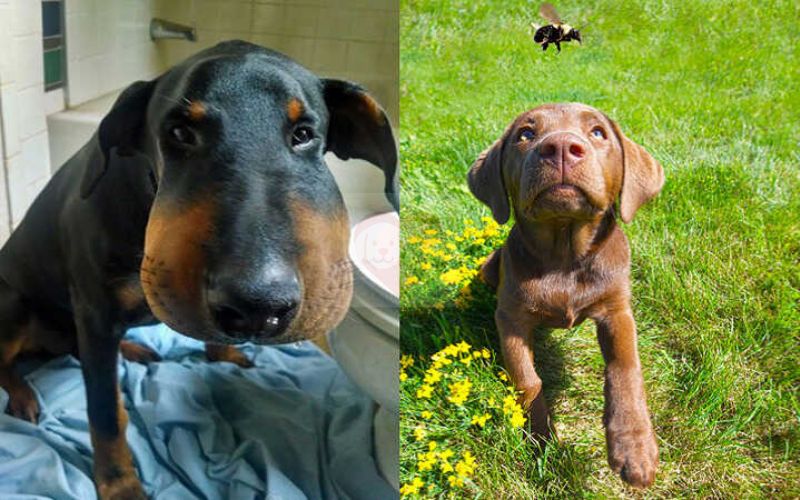
Quick answer: You can monitor your dog at home if it has only a few bites, isn’t having trouble breathing, and is still eating, drinking, and moving around normally.
Generally, you can provide care at home if your dog shows the following symptoms:
- Only 1–2 bites.
- The bite marks are on the legs, back, hips, or tail.
- The dog is still awake.
- No vomiting.
- I'm not short of breath.
- No severe facial swelling.
- No seizures.
In these cases, the immune system will naturally neutralize the bee venom, and the swelling will gradually subside after a few days.
Emergency situations requiring immediate veterinary care
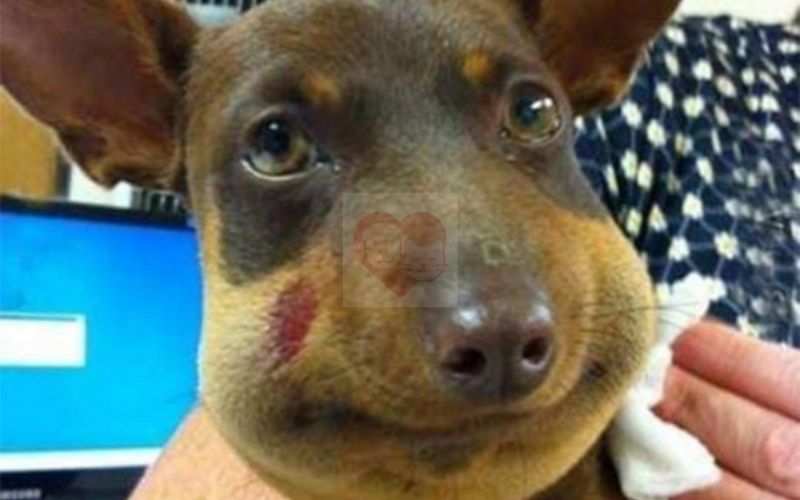
Quick answer: If your dog is having trouble breathing, experiences rapid facial swelling, has been stung inside the mouth, or has been stung by multiple bees, take it to a veterinary hospital immediately.
These are warning signs that you shouldn’t ignore:
- Burns to the lips, nose, tongue, or throat.
- Swelling throughout the face.
- Wheezing.
- Purple or pale white gums.
- Foaming at the mouth.
- Seizure.
- Constant vomiting.
- Loss of consciousness.
- Five or more bites.
- He accidentally disturbed a beehive and was attacked by a swarm of bees.
In these cases, the dog may experience airway edema or anaphylactic shock. This is a veterinary emergency that requires immediate treatment.
What should you do if a dog gets stung by a bee?
Quick answer: Stay calm and assess the situation, remove the stinger properly (if present), apply a cold compress to reduce swelling, and monitor the area for the first 24 hours.
Proper treatment immediately after a dog is stung by a bee can help relieve pain, limit the spread of venom, and reduce the risk of complications. Do not apply any medication or give your dog antihistamines without a veterinarian’s instructions.
Step 1. Check the dog's condition
Quick Answer: Monitor the dog for the first 30 minutes to check for signs of anaphylaxis or respiratory distress.
Please check:
- Breath.
- Gum color.
- Level of alertness.
- Ability to stand and walk.
- Degree of swelling.
If your dog's gums turn white, purple, or gray, take your dog to the emergency room immediately.
Step 2. Remove the bee stinger properly
Quick answer: Only remove the stinger if it’s a honeybee, and use a hard object to scrape it off horizontally instead of using tweezers.
Honeybees usually leave their stingers behind after stinging, while wasps or hornets usually do not.
Instructions:
- Carefully examine the burned area.
- Use a plastic card or the blunt edge of a knife.
- Gently slide it sideways to push the tip out.
Do not:
- Use tweezers.
- Squeeze by hand.
- Squeeze the bite mark.
These actions can cause any remaining venom sacs to release more venom into the dog’s body.
Step 3. Clean and reduce swelling
Quick answer: Rinse the burned area thoroughly, then apply a cold compress for 10–15 minutes to relieve pain and reduce swelling.
After removing the tip:
- Rinse with clean water or saline solution.
- Wrap the ice in a towel.
- Apply the compress for about 10–15 minutes.
- Take a 10-minute break, then continue if necessary.
Applying a cold compress helps:
- Circulatory system.
- Pain relief.
- Reduces inflammation.
- Prevent the spread of the disease.
This is a treatment recommended by many veterinarians for mild bee stings.
Step 4. Prevent the dog from licking the wound
Quick answer: Put an anti-licking collar on your dog if it keeps scratching or licking the area where it was stung by a bee.
If a dog licks or scratches excessively, it will:
- Causes a tear in the skin.
- Increased risk of infection.
- Causes prolonged inflammation.
- Slows down wound healing.
Using an Elizabeth collar is an effective way to protect damaged skin.
How long does it take for a dog to recover from a bee sting?
Quick Answer: Most dogs stung by a bee will recover within 2–3 days if the sting is mild. Cases involving facial swelling may take 5–7 days to fully heal.
Recovery time depends on the number of stings, the amount of venom, and each individual’s immune response.
| Time | Common Symptoms |
| 0–6 hours | Pain, redness, and rapid swelling |
| 24 hours | The swelling reached its peak |
| 48–72 hours | The swelling and pain are starting to subside |
| 5–7 days | Severe facial swelling has nearly completely subsided |
If the swelling continues to spread or pus appears after 72 hours, take your dog to the vet, as it may have an infection.
When should you take your dog to the vet?
Quick answer: Do not wait if your dog is having trouble breathing, has severe facial swelling, or has been stung by multiple bees at once.
Situations requiring immediate medical attention include:
- Shortness of breath.
- A wheeze.
- Sore throat.
- Constant vomiting.
- Diarrhea.
- Seizure.
- Loss of consciousness.
- He suffered dozens of burns.
- Puppies under 6 months old.
- Older dogs or dogs with heart, liver, or kidney disease.
A veterinarian may administer anti-inflammatory medications, antihistamines, intravenous fluids, or respiratory support if necessary.
How to Prevent Dogs from Being Stung by Bees
Quick answer: Limiting your dog's exposure to beehives and monitoring its play area are the most effective preventive measures.
Some measures that should be implemented:
- Do not let your dog play near thickets.
- Have bee nests around your home removed by a professional service.
- Keep your dog on a leash when you take it for a walk.
- Do not let your dog chase insects.
- Carefully survey the area before letting your dog run free.
Prevention helps significantly reduce the risk of dogs being stung multiple times or experiencing a dangerous allergic reaction.
Summary of How to Treat a Dog Stung by a Bee
| Scenario | How to handle it |
| One bite, healthy dog | Monitor at home, apply cold compresses |
| There is a bee sting | Slide sideways with a plastic card |
| Mild swelling | Apply an ice pack for 10–15 minutes |
| Lick a lot | Wearing an Elizabeth collar |
| Shortness of breath | Take it to the vet right away |
| Swelling in the mouth or throat | Emergency Care |
| Stung by many bees | Treatment at a veterinary hospital |
FAQ
Will a dog recover on its own after being stung by a bee?
Yes. If there are only one or two bites and there is no severe allergic reaction, dogs usually recover on their own after about 2–3 days. During this time, you should monitor them closely and keep the bitten area clean.
How long does it take for a dog's swelling to go down after being stung by a bee?
Typically, swelling peaks after about 24 hours and then gradually subsides. In most cases, the swelling will have almost completely subsided within 48–72 hours, while facial swelling may last 5–7 days.
Should you give your dog antihistamines?
Do not use human antihistamines or pain relievers without consulting a veterinarian. Some active ingredients can be toxic to dogs. Medication should only be administered under a veterinarian’s guidance regarding the appropriate type and dosage.
Are wasps more dangerous than honeybees?
Hornets typically do not leave their stingers behind and can sting multiple times, resulting in a larger amount of venom entering the body. Therefore, if a dog is stung multiple times by hornets, the risk of poisoning and complications increases significantly.
Is it dangerous for a dog to be stung by a bee on the mouth?
Yes. This is one of the most dangerous areas because swelling can narrow the airway. If a dog is stung on the tongue, lips, throat, or inside the mouth, take it to a veterinary clinic immediately, even if the dog is still conscious at first.
References
- Vemedim – First Aid Guide for Dogs with Insect and Bee Stings.
- Danang Pet – Advice on Treating Dogs Stung by Bees and Signs That Require Emergency Care.
- Pet Mart – Tips for Caring for Your Pet After an Insect Bite.
- World Small Animal Veterinary Association (WSAVA) – Recommendations for Monitoring Allergic Reactions and Emergency Care in Veterinary Medicine.
